Meat Slaughterhouses in Egypt: Waste Management Triggers Environmental Disasters
An open-source investigation documents environmental and legal violations in the management of waste inside Egypt's government-run slaughterhouses, and the discharge of their polluted wastewater into sewage networks and agricultural irrigation canals — based on field visits to four slaughterhouses in Cairo and Giza governorates, laboratory analysis of a water sample, satellite imagery and open-source research.
Investigation Methodology
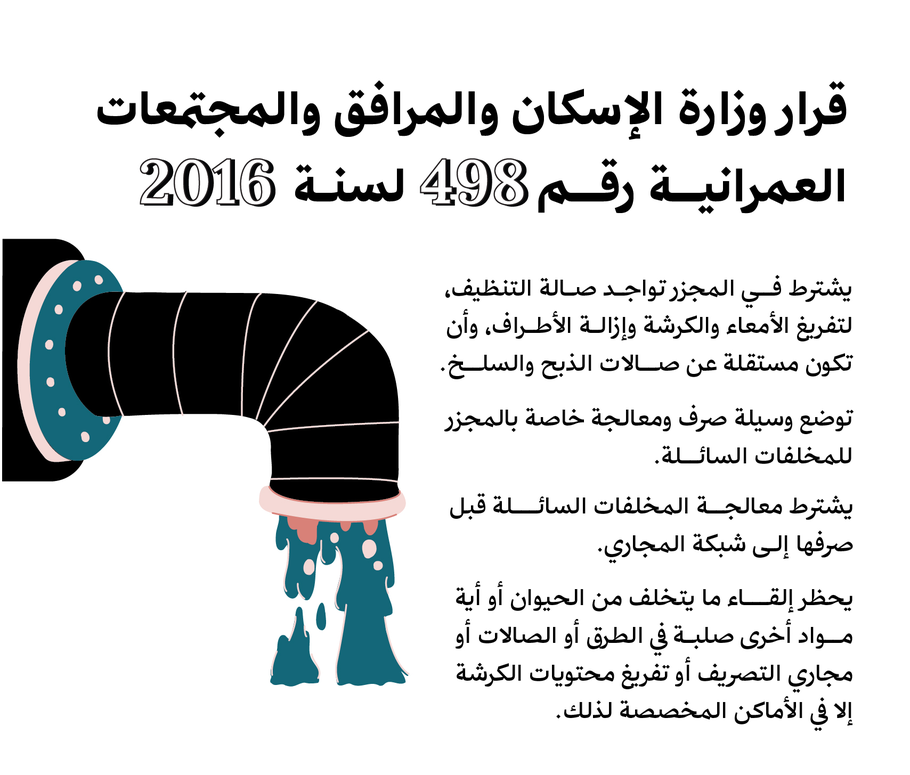
This investigative report examines the environmental threats stemming from improper disposal of slaughterhouse waste into Egypt's sewage networks and freshwater canals. It also exposes environmental and legal violations in government-run slaughterhouses, which contravene Ministerial Decree No. 498 of 2016 on slaughterhouse requirements and the Environmental Guidelines for Slaughterhouses and Butchering Points issued by the Ministry of Environment.
The investigation draws on field visits to four slaughterhouses in Cairo and Giza governorates, complemented by open-source data and satellite imagery, and a water sample analyzed at a specialized laboratory of the National Research Center, to uncover environmental violations. It also explores innovative and sustainable waste management solutions that prioritize environmental and climate protection.
In 1990, Ahmed Zaqzouq, a resident of the Az-Zakat Foundation area in Cairo's Marj district, returned from working abroad only to discover that his wife was struggling with severe respiratory issues. A doctor's examination revealed she had developed chronic asthma, and the medical advice was clear: they needed to leave their home immediately. Similarly, Ibrahim Sharaf Ed-Din, another resident of the same area, struggles with foul odors and the haphazard dumping of waste.
Situated near schools and residential neighborhoods, the drain becomes particularly hazardous during the summer. Rising temperatures worsen the spread of diseases and waterborne infections, forcing many residents to install home water purification systems. The problem is not confined to water contamination — drain water seeps into building foundations, causing dampness and structural damage. The situation has deteriorated further with "Al-Momtaz Slaughterhouse" dumping its waste directly into the open Belbeisi Drain.
These personal accounts mirror the broader struggles of residents living along the "Belbeisi Drain," also known locally as the "Belbeisi Canal." Stretching 9 kilometers from the Az-Zakat Foundation area in Cairo to the Qalaj area in Qalyubia Governorate (north of the capital), the drain is a major source of pollution. Its banks are littered with accumulated waste, emitting foul odors and fostering the proliferation of disease-carrying insects.
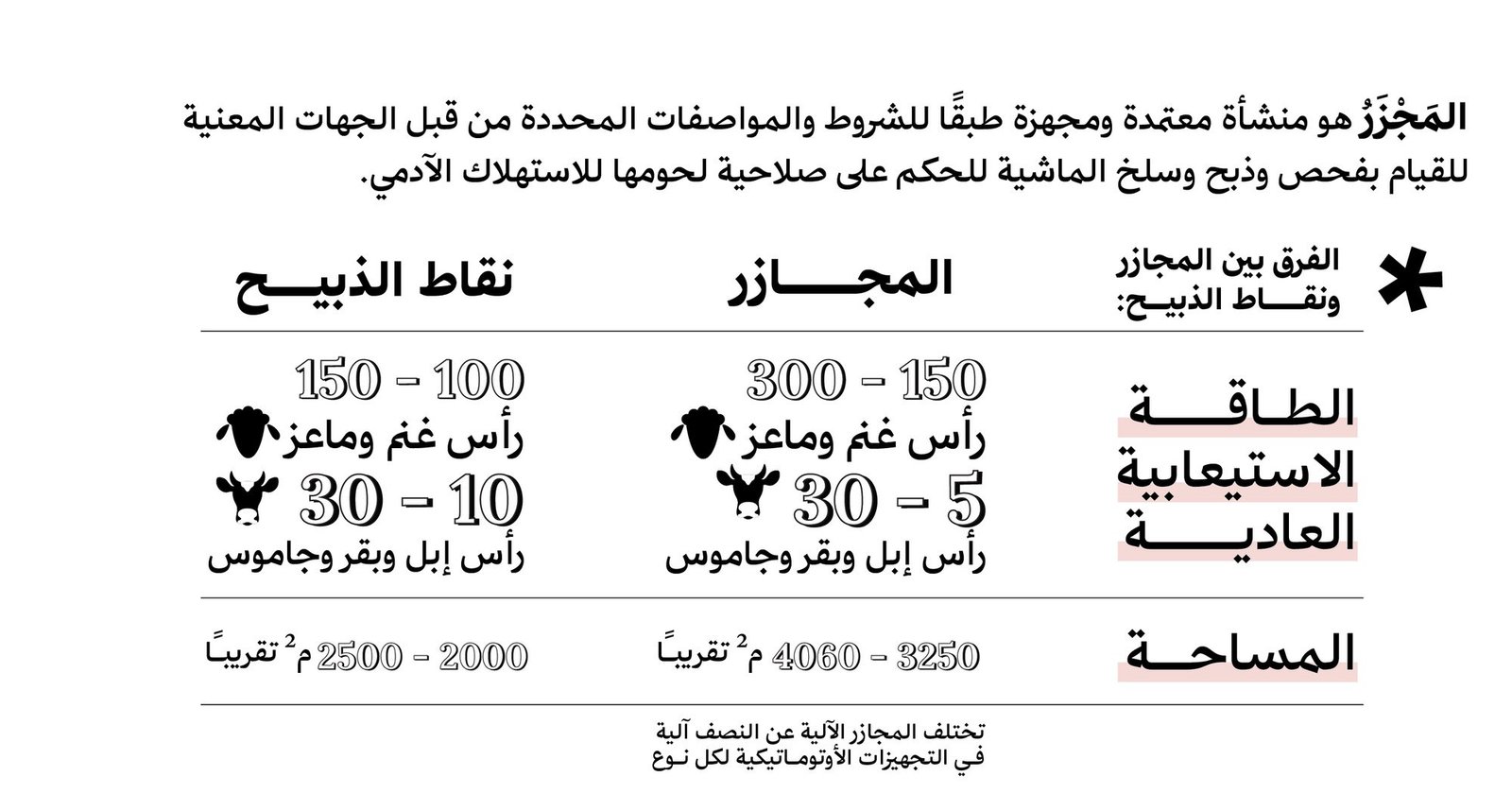
Both government-run and private slaughterhouses and butchering points in Egypt are governed by Ministerial Decree No. 498 of 2016, issued by the Ministry of Housing, Utilities, and Urban Communities. This regulation, published in the Official Gazette on August 24, 2016, is overseen by the General Directorate of Slaughterhouses, operating under the General Authority for Veterinary Services within the Ministry of Agriculture. Egypt is home to 486 government-run slaughterhouses and butchering points, which, according to the 2021 Annual Bulletin of Statistics Livestock Report issued by the Central Agency for Public Mobilization and Statistics (CAPMAS), processed a total of 1.958 million livestock heads.
Slaughterhouses and Livestock Heads Slaughtered
Displacement is not limited to wars and conflicts; waste and pollution also force people to abandon their homes in search of a clean, disease-free environment for their families. This is what concerns Ahmed Zaqzouq after his wife's chronic asthma diagnosis.
Leaving their neighborhood and home is not an easy decision, but for Zaqzouq and his children, the choice is stark: either sacrifice their community and stability, or risk their health and the well-being of their mother, whose health has deteriorated due to pollution. Her condition worsened after being diagnosed with heart muscle enlargement, a complication that developed after starting treatment for her chronic asthma, which involved numerous medications, including corticosteroids.
How Do Butchers Dispose of Slaughterhouse Waste?
To understand how butchers manage waste disposal in slaughterhouses, we reached out to butcher groups through the "Facebook" platform to inquire about the established methods for waste management. The response was consistent: waste is disposed of by using water hoses to channel liquid waste through drains that run along the slaughter hall.
As for solid waste, typically consisting of the contents of stomachs and intestines, which often contain food remnants, it is also directed into these drains. In some slaughterhouses, the solid waste is directed to a separate area for collection and is then transported elsewhere for disposal, often with the assistance of a cleaning service contracted by the slaughterhouse. As for what is referred to as "Saqt" [سقط] — a term covering heads, skins, and feet — these are collected by specialized traders who either sell them to leather tanneries or to vendors who deal in "meat fruits," cheaper cuts often purchased by low-income families as a more affordable alternative to regular meat.
What About Regulations and Laws?
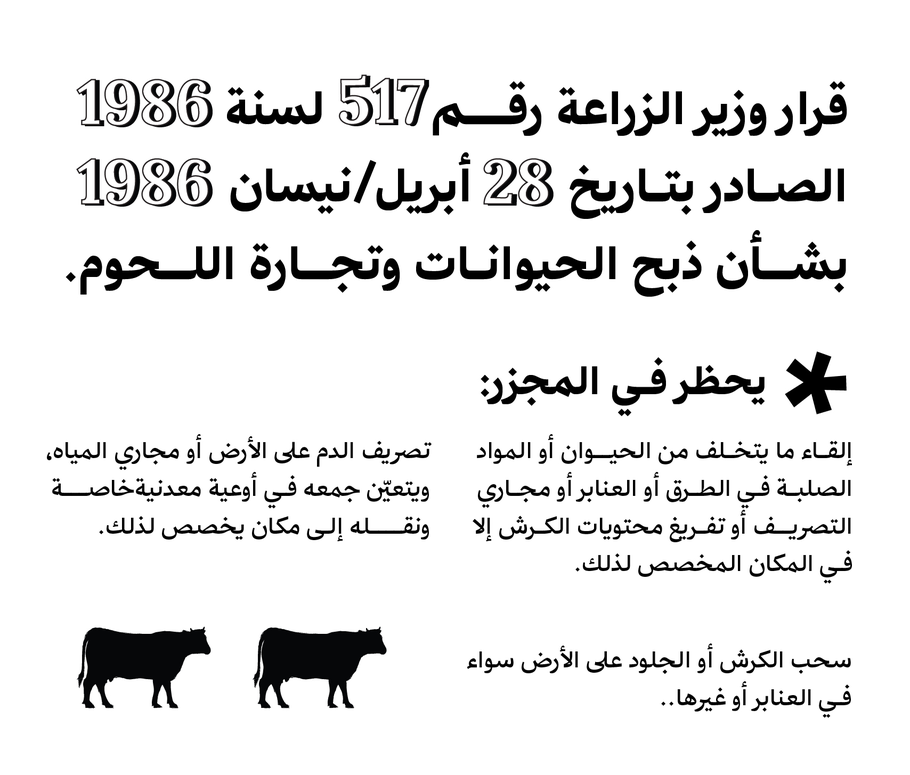
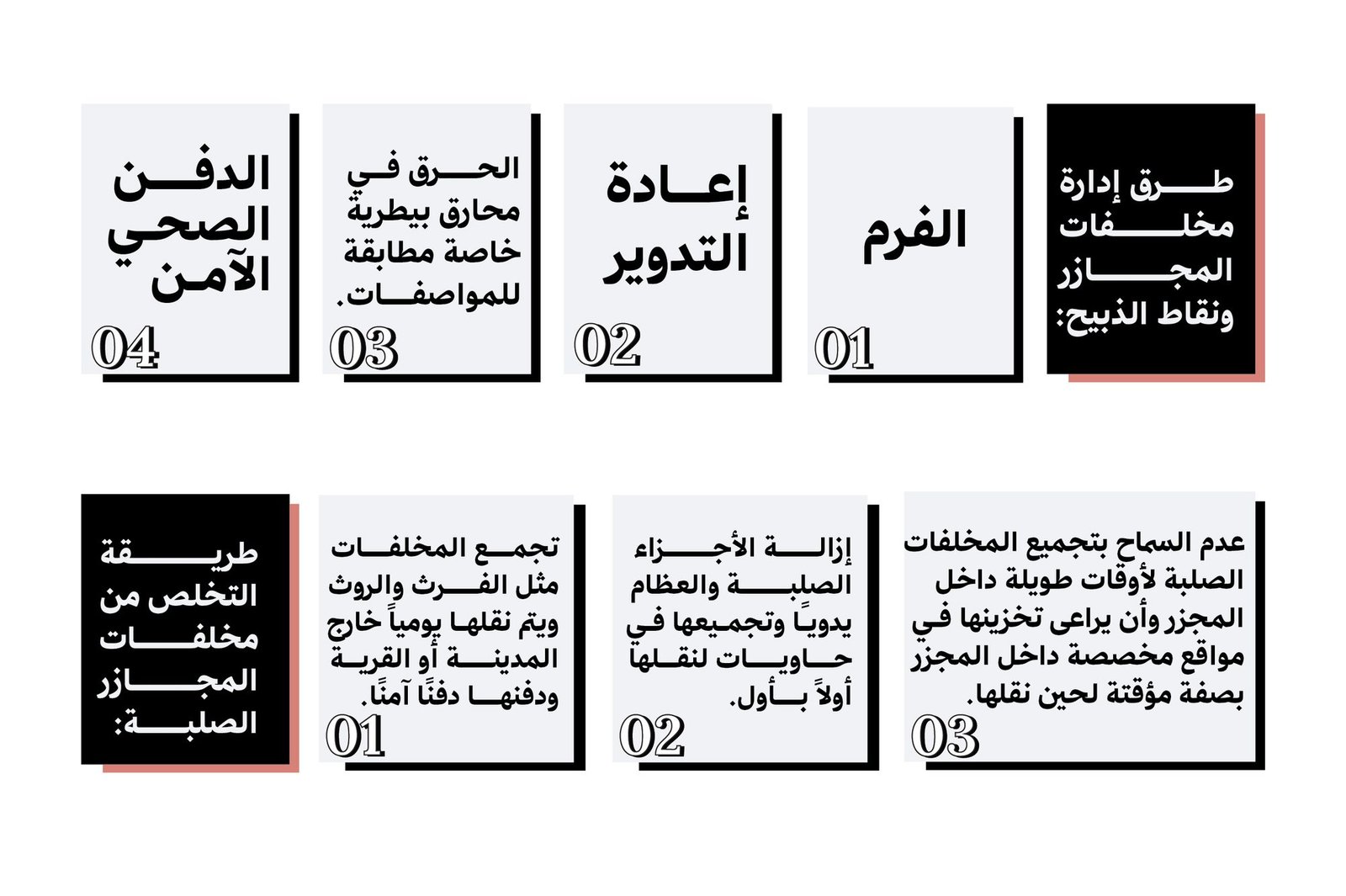
Egyptian laws have established clear methods and procedures for waste disposal, along with a set of prohibitions:
The Environmental Guidelines for Cattle Slaughterhouses and Butchering Points, issued by the Ministry of Environment, define the proper methods for managing solid waste disposal.
Utter Chaos!
To verify the butchers' claims, we examined online photos and videos, which revealed a scene of utter chaos. In a video from the Monib Slaughterhouse in Giza, the ground is visibly stained green, the distinctive color of stomach contents, with solid waste scattered on the ground without any supervision. This situation mirrors that of the Oseem Slaughterhouse in Giza. The video also shows stomach waste left on the floor and in the liquid waste drainage channels, while a veterinary specialist at the slaughterhouse requests that the reporter stop filming.
As for the Abu Qir Slaughterhouse in Alexandria, the images are even more telling, with blood and waste scattered across the ground. We also observed that the building itself appears to be in a state of severe disrepair. Similarly, the Tora Slaughterhouse in Cairo is in a comparable state of disrepair.
What Did Our Field Visits Reveal?
In light of the images and videos, we had no choice but to conduct field visits to three different government-run slaughterhouses, each varying in size and equipment. During these visits, we documented violations of construction regulations as well as improper waste disposal practices within the slaughterhouses.
Except during holidays, the slaughterhouses operate between 6 or 7 a.m. and 10 or 11 a.m. However, the peak of activity occurs between 7 and 9 a.m., when slaughtering increases and chaos ensues. After 9 a.m., water is sprayed to clean the floors in preparation for closing the slaughter hall.
Our first visit took us to the Kerdasa Slaughterhouse in Giza, where we encountered numerous violations. The floor of the slaughter hall was covered in blood, and the intestines of slaughtered animals were either scattered on the floor or disposed of in the liquid waste drainage channels, which are supposed to carry only liquid waste. The entire facility consisted of a single slaughter hall, and there was no dedicated cleaning area for solid waste disposal.
Next, we visited the Warraq Slaughterhouse in Giza, which is larger than the Kerdasa facility. We documented violations through undercover filming, as we couldn't reveal our journalistic identity. Here, it became evident that solid waste was being dumped into the water channels, with animal skins and intestines left on the ground, contributing to the foul odors in the area.
On our final visit, we went to Egypt's largest slaughterhouse, the Basatin Slaughterhouse on the highway in Cairo, which has a capacity of 5,000 animals per day. Upon entering, security warned us against filming, but we relied on undercover filming to document violations. While the structure complied with the regulations requiring separate cleaning areas and solid waste collection points away from the slaughter hall, we still observed some solid waste being disposed of in the liquid waste drainage channels.
Although some veterinarians working in the facility address these violations, others remain silent to avoid conflict with the butchers. During our visit, we spoke with a veterinarian overseeing one of the cattle slaughter halls, who confirmed that solid waste should be disposed of in the designated area near the slaughter hall. Despite this, some butchers continue to dump solid waste into the liquid waste channels.
While some slaughterhouses discharge untreated wastewater into canals and agricultural lands, others have implemented wastewater treatment systems. One example is the privately owned Sharqawi Slaughterhouse in Shubra El Kheima, Greater Cairo. In 2015, the Governor of Qalyubia halted its operations due to the facility's discharge of polluted water into the waterways. However, the slaughterhouse resumed operations after establishing an independent treatment plant. Similarly, the Basatin Slaughterhouse — the largest government-run slaughterhouse in Egypt — now features a separate wastewater treatment unit established in 2021.
Before moving to the Az-Zakat Foundation area in 1979, Zaqzouq lived in the Gesr Es-Suez neighborhood of Cairo. Despite his family's objections, he believed the move was worthwhile, as it offered him a fresh start in building his marital home. "At that time, the Az-Zakat area was lush with trees and farmland, and the drain was a clean agricultural channel," Zaqzouq recalls.
He continues, "Everything changed after the construction of the Ring Road and the onset of urban development. Residents replaced farmland with houses and buildings, while the sewage treatment plant began discharging polluted wastewater into the drain." The situation worsened about 15 years ago with the establishment of the "Mumtaz Slaughterhouse" in the area. Its waste disposal practices — dumping blood and manure into the drain — exacerbated the pollution problem.
Slaughterhouse Wastewater: A Satellite-Monitored Environmental Disaster
The environmental crisis associated with slaughterhouses extends beyond internal violations to the improper discharge of contaminated wastewater into agricultural irrigation canals and sewer networks. Satellite imagery reveals the scope of this disaster, particularly at waterways adjacent to facilities such as the "Oulad Bakri" slaughterhouse in Kom Ashfin, Qalyubia Governorate, where blood contaminated the canal's water, spreading far beyond the facility's discharge point despite the slaughterhouse sitting at the end of one bank.
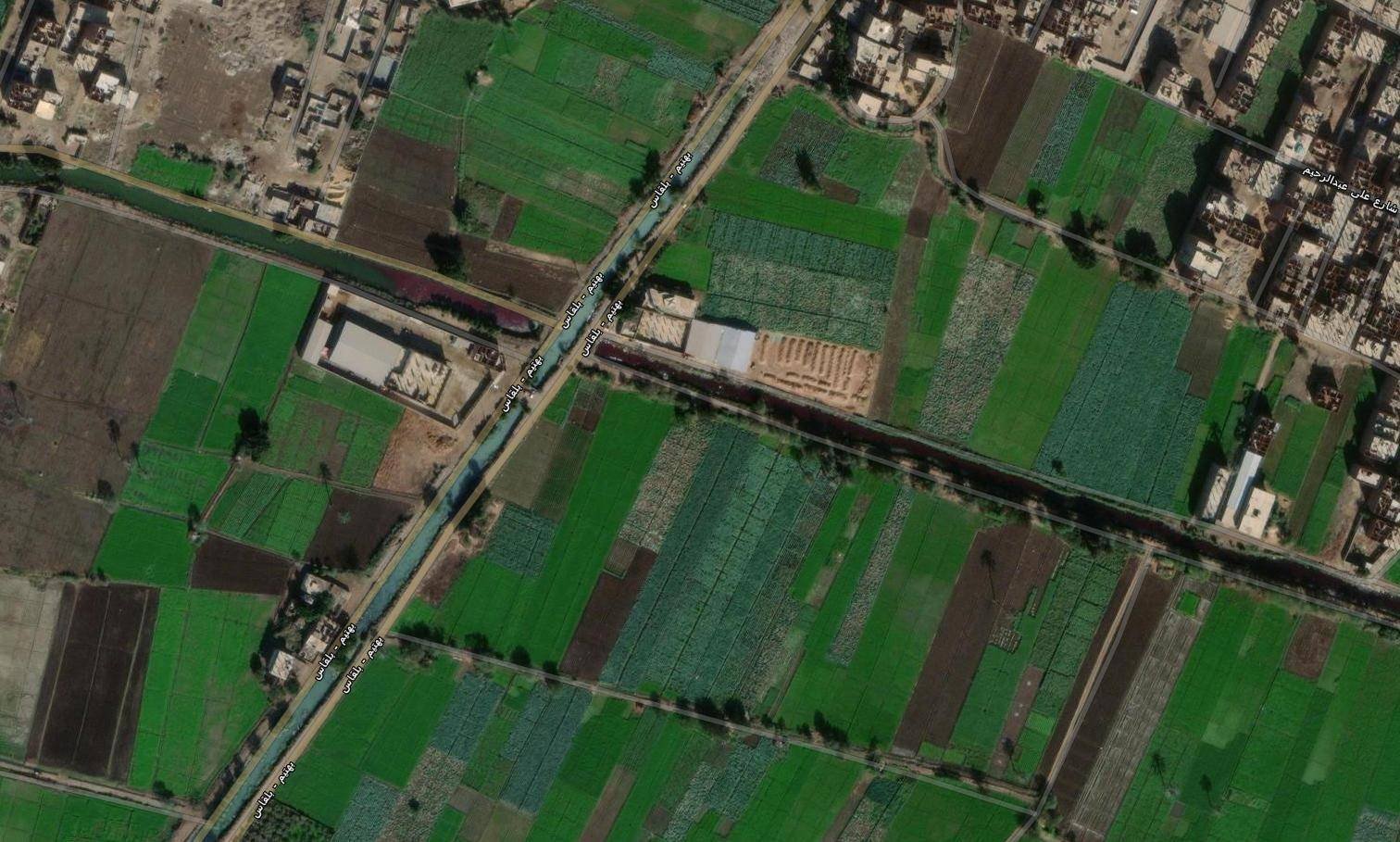
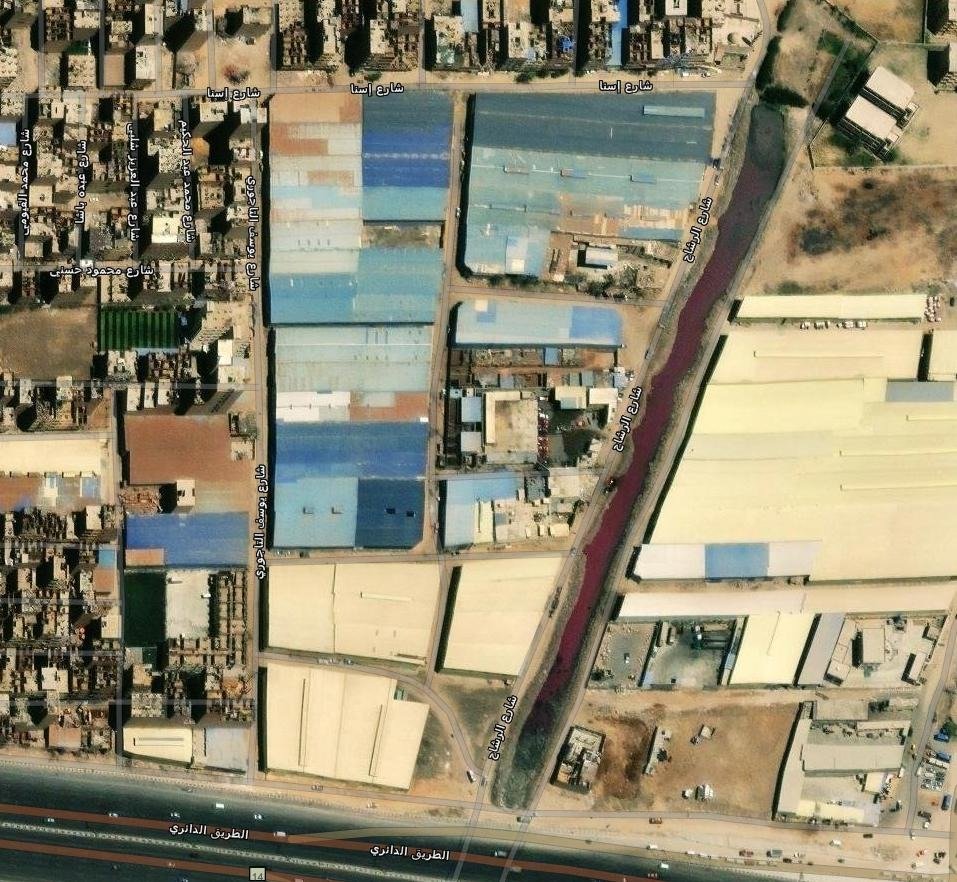
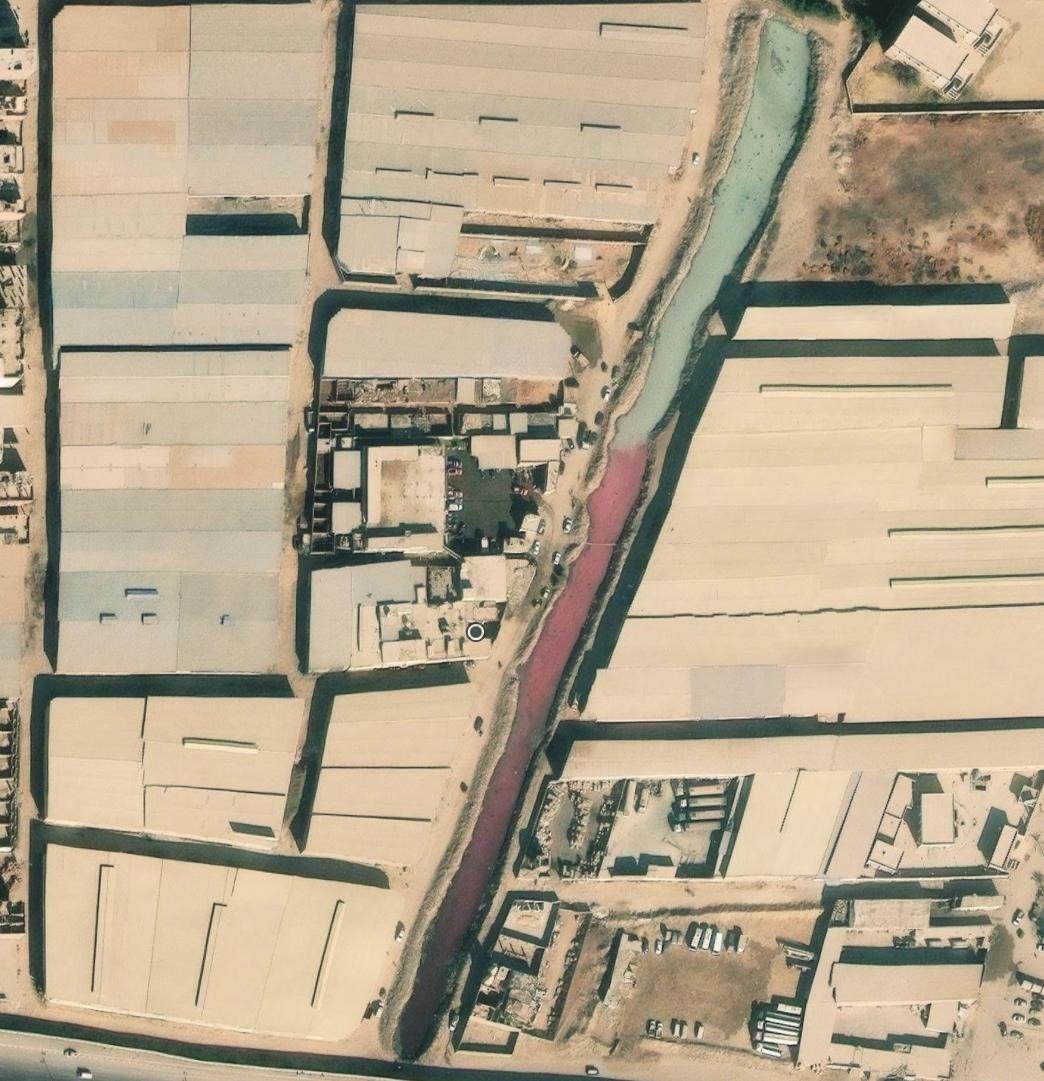
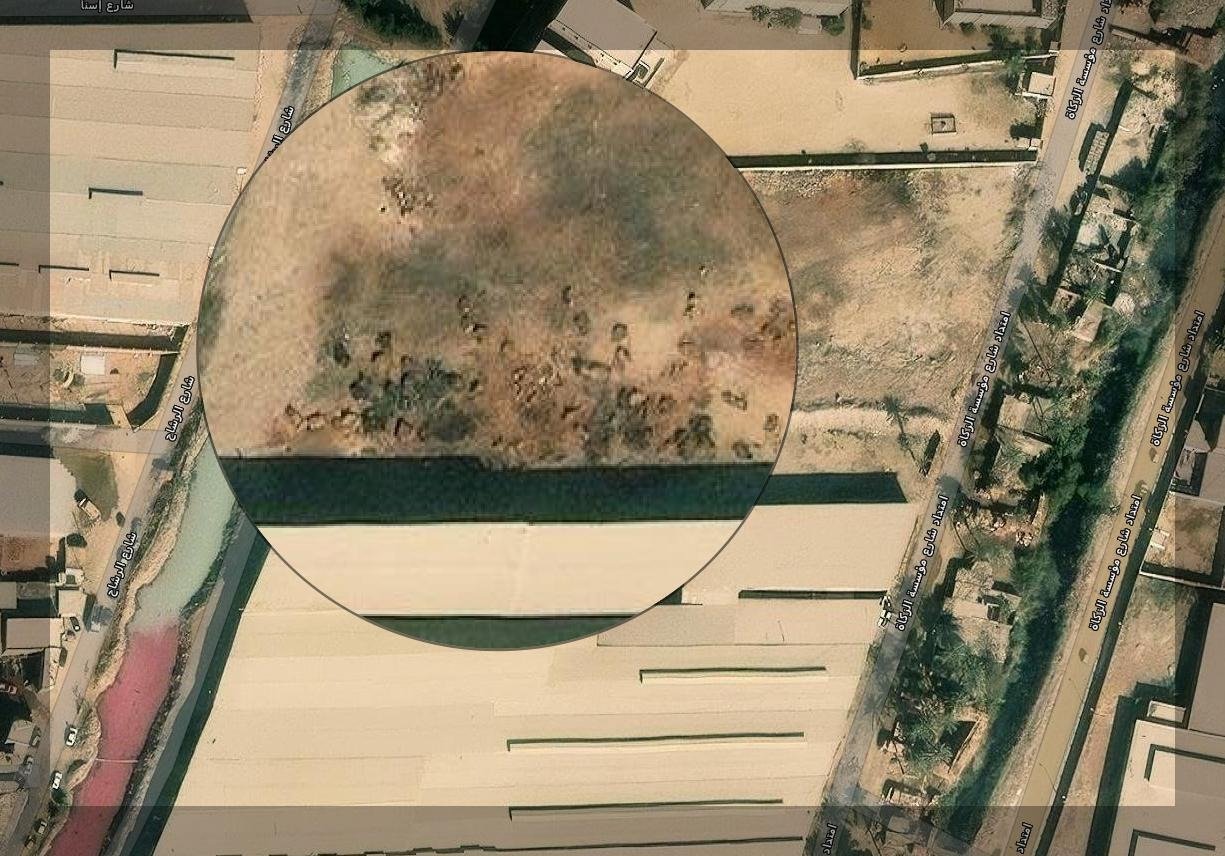
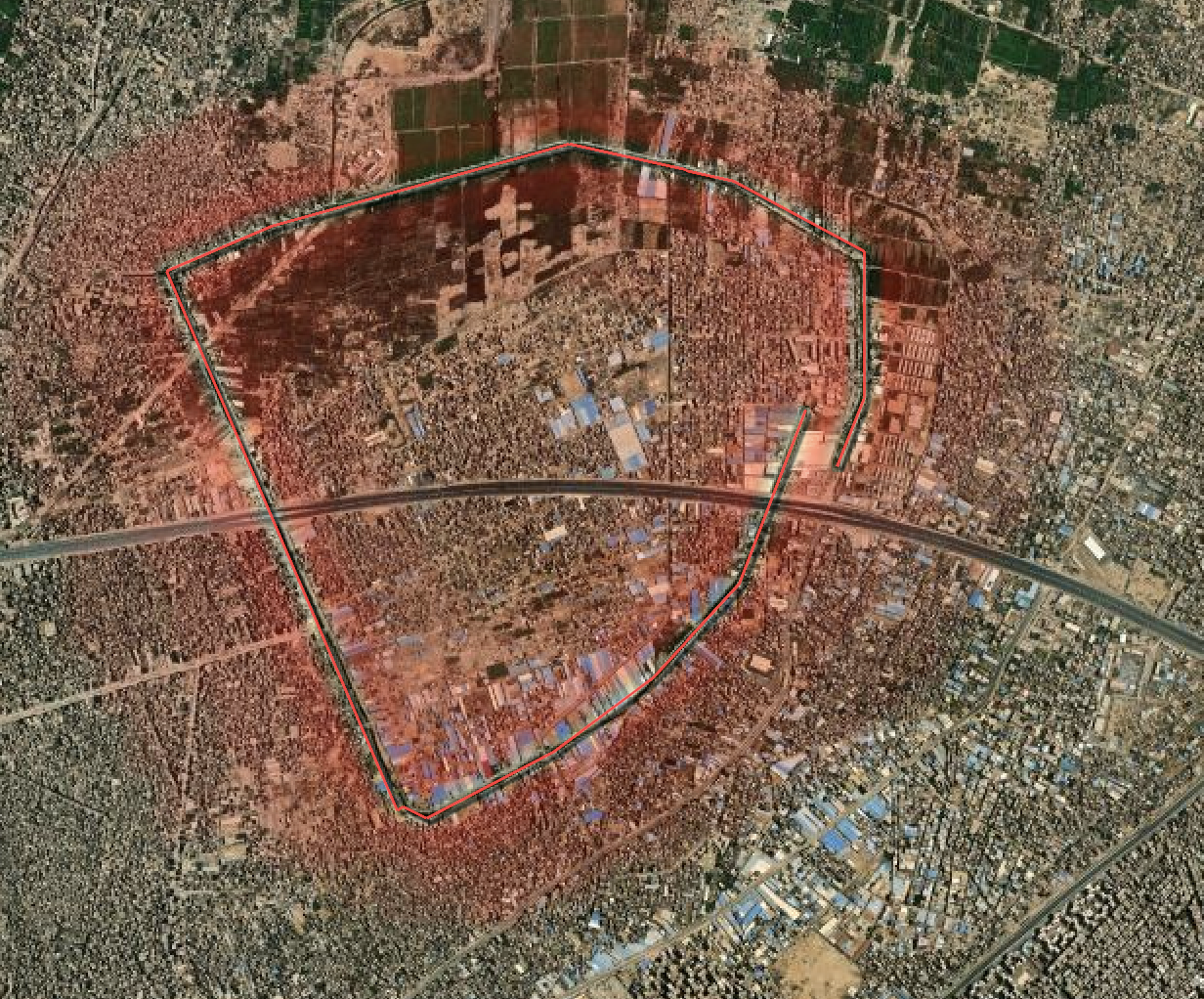
The "Belbeisi Drain" suffers from severe pollution due to untreated waste discharged directly by the Mumtaz slaughterhouse. This pollution, along with other pollutants in the canal, spans 9 kilometers, negatively impacting an area of approximately 44 square kilometers. To highlight the gravity of the situation, we created a detailed data map illustrating the affected area, aiming to shed light on the scale of the issue and its implications for the environment and public health.
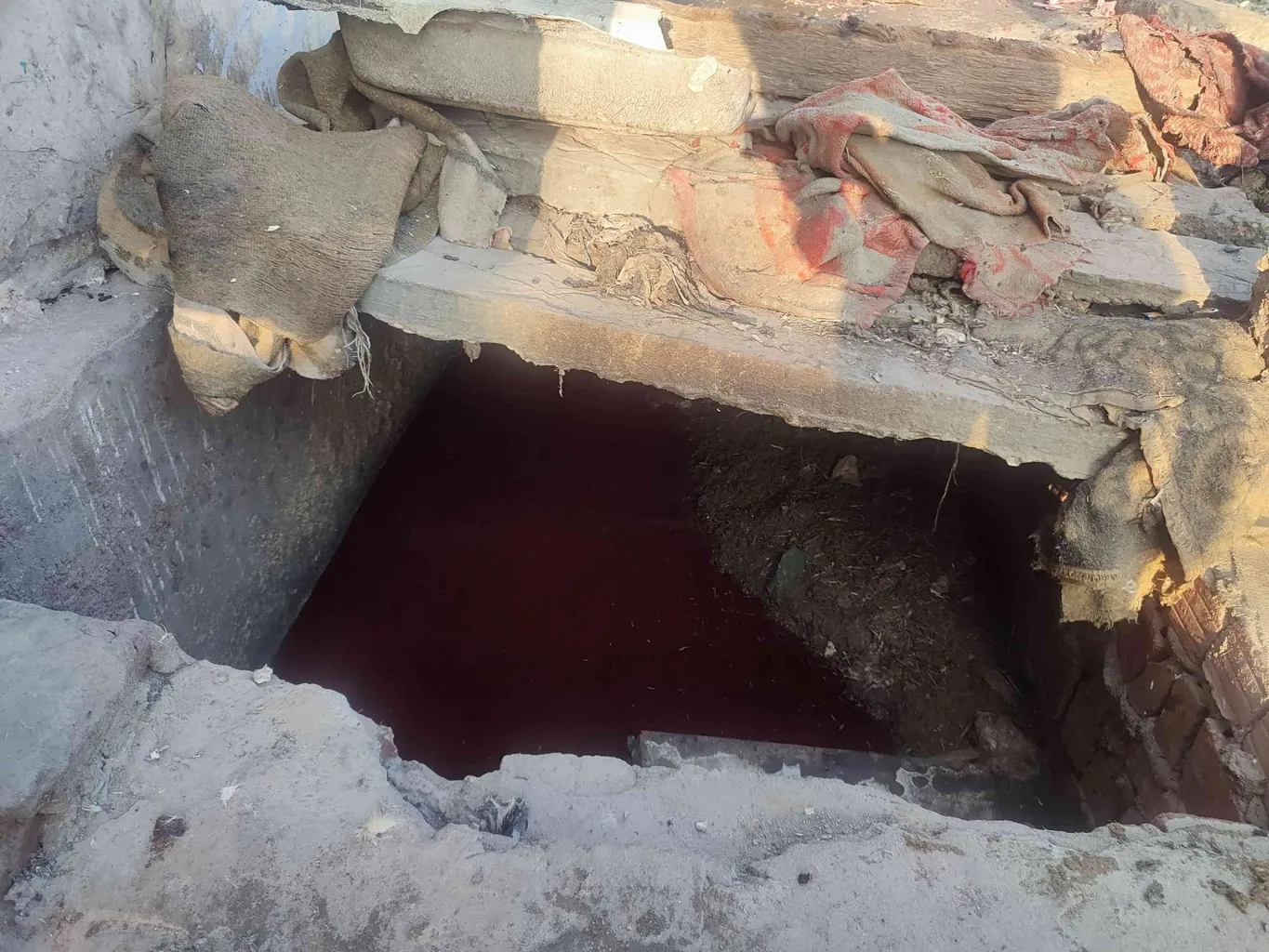
To corroborate the satellite images with on-the-ground reality, we visited the Mumtaz slaughterhouse, where we observed wastewater being discharged directly into the drainage canal, coloring it with the blood of the slaughtered animals. We also noticed widespread garbage and a solid waste dump in the vicinity of the slaughterhouse, extending into the surrounding residential area.
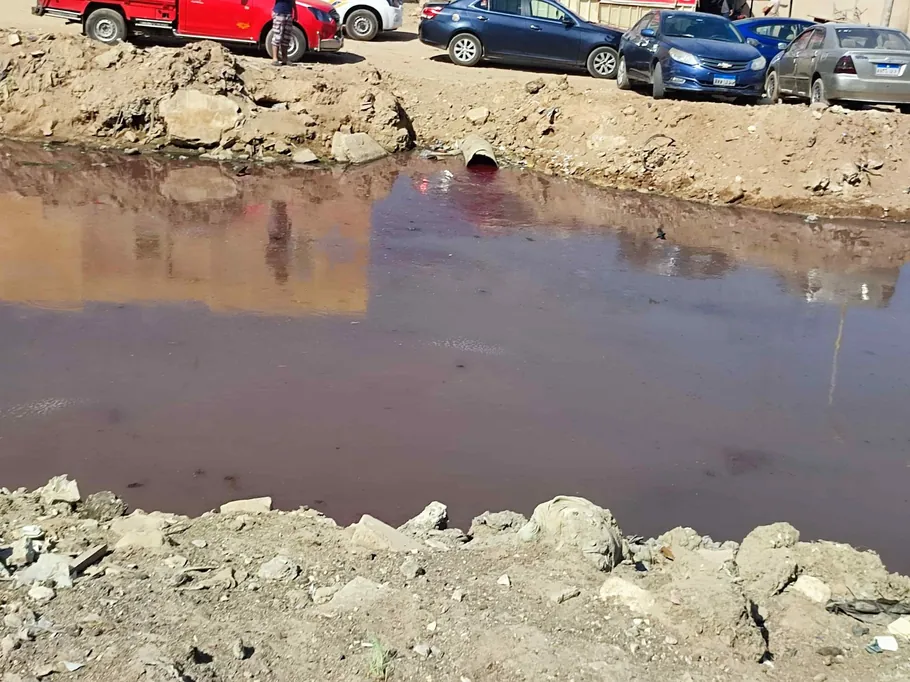
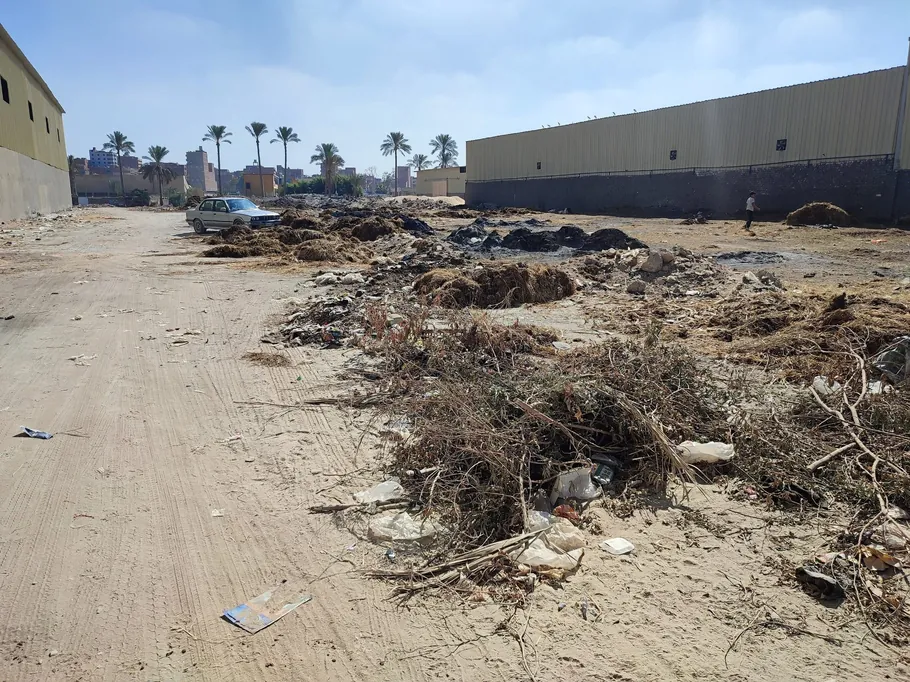
During our visit to the nearby residences, we found that some of the homes were suffering from dampness caused by the drainage canal. While the wastewater treatment plant is supposed to aid in purifying and processing the canal water, it has been discharging its waste directly into the canal, right next to the slaughterhouse!
Also at the "Kerdasa" slaughterhouse, we observed wastewater being stored in an open tank, awaiting discharge. This practice poses significant environmental damage, especially since the slaughterhouse is situated close to the residential area.
 Hover to see it in color
Slaughterhouse Pollutants: A Hidden Danger
In Egypt, slaughterhouses handle tens of thousands of sacrificial animals, particularly during the holiday seasons. The Ministry of Agriculture encourages citizens to use these facilities for slaughter and provides free slaughtering services under thorough veterinary supervision to curb the practice of street slaughter and protect the environment. However, the lack of adequate oversight at these facilities, which have turned into unseen environmental threats, poses a real danger to the entire ecosystem.
In this regard, we spoke with Dr. Nagham Rafiq, Professor of Environmental Health at the Faculty of Veterinary Medicine, Kafr El-Sheikh University, who described slaughterhouses as a "ticking environmental time bomb." She explained: "The waste produced by slaughterhouses, whether solid or liquid, as well as the gases emitted by livestock, release biological pollutants such as bacteria, fungi, rumen contents, fats, grease, and suspended particles, as well as chemical pollutants, including hydrogen sulfide with its foul odor. Furthermore, slaughterhouses consume large quantities of water."
In addition to biological and chemical pollutants, the wastewater from slaughterhouses carries large amounts of organic matter, intensifying the pollution. Dr. Nagham noted: "Blood, in particular, is rich in nitrogen and phosphorus, and when it enters water sources, it leads to several issues, primarily the growth of algae, which depletes oxygen and harms aquatic life, often causing the death of many organisms. Additionally, the water turns red due to blood oxidation, and the spread of foul odors."
She also pointed out that "the organic pollutants resulting from the blood of a single cow are equivalent to the organic pollutants produced by 50 people." Another aspect of this damage lies in "the bacteria and microorganisms present in the animal's digestive system, which are transferred upon slaughter and can contaminate the water, potentially causing diseases such as salmonella."
Untreated Water in Sewage Networks
Zaqzouq chose to stay in the area and, along with local residents, made several efforts to secure an official decision to fill in the drain and activate the newly constructed sewage treatment plant. This was especially critical, as the existing treatment plant, which was supposed to process the wastewater, was discharging water directly into the drain.
Ibrahim Sharaf Ed-Din shared: "The affected residents submitted numerous appeals to local parliamentarians, who made many promises to fill in the drain and operate the new sewage plant. However, none of these promises were fulfilled. Our last hope came in May 2024 when the local MP assured us that a solution had been found, and the drain would be filled in the coming days. Unfortunately, the drain remains untouched, and no solution has been provided."
Most of the slaughterhouses mentioned in this investigation discharge their wastewater directly into the sewage networks without any treatment. This wastewater is governed by the standards outlined in Decision No. 44 of 2000, which sets the maximum allowable pollutant levels for discharge into the sewage network.
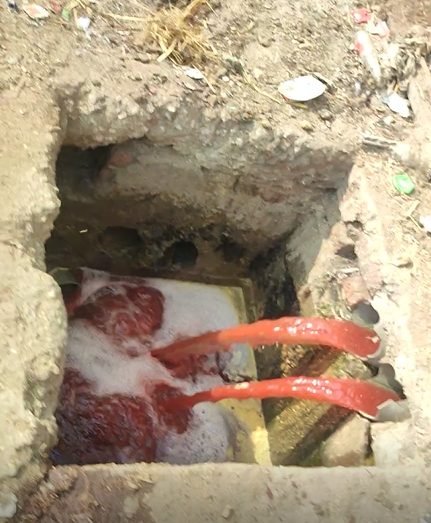
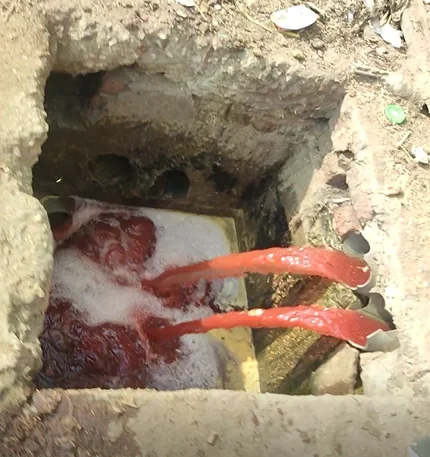
To assess whether the wastewater complies with Decision No. 44 — which specifies the permissible limits for pollutants (600 mg/L of Biochemical Oxygen Demand (BOD), 1,100 mg/L of Chemical Oxygen Demand (COD), 100 mg/L of nitrogen, and 800 mg/L of Total Suspended Solids (TSS)) — we collected a sample from the final discharge point of the slaughter hall at the Warraq slaughterhouse, which is discharged untreated directly into the sewage system. The sample was analyzed at the National Research Center's water pollution laboratory, an official research institution.
 Hover to see another angle
The analysis confirmed high levels of contamination, with the sample far exceeding the specified limits. Not only did it fail to meet the required standards, but the pollutant levels were alarmingly high. For instance, the levels of organic materials, in both BOD and COD, were approximately four times the allowed limits. Moreover, the concentration of TSS was twice the permissible threshold.
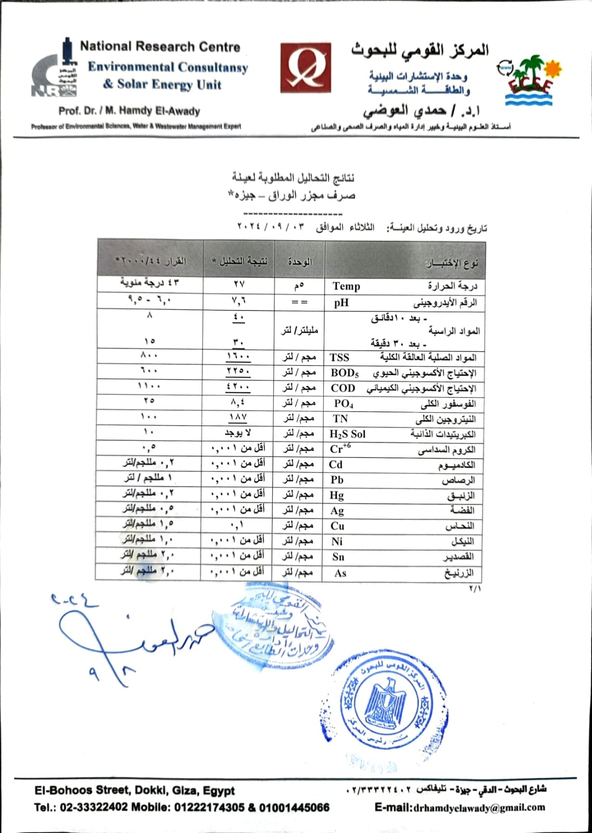
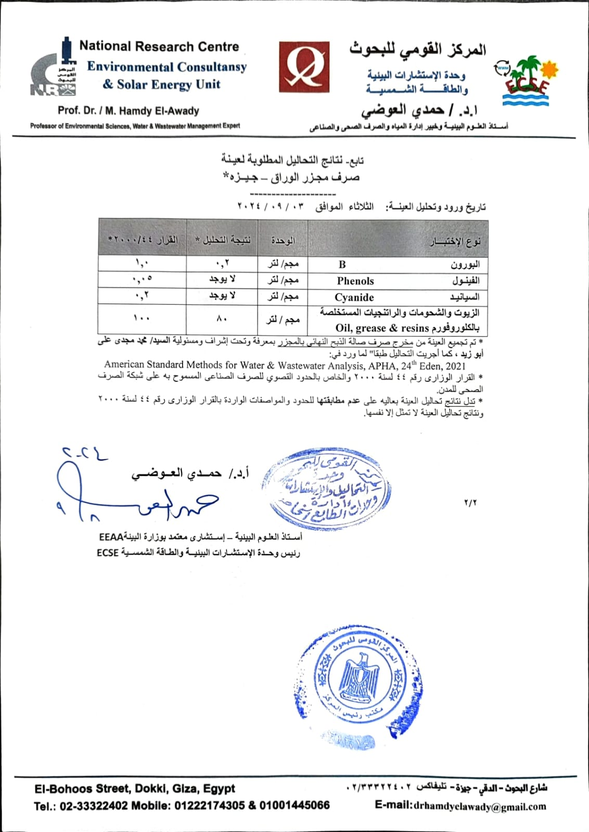
The two pages of the Warraq slaughterhouse water sample analysis (page 1 and page 2), issued by the National Research Centre's water pollution testing lab.
What Can We Deduce From These Figures?
The water sample we analyzed contains several harmful chemical elements, including organic materials such as BOD and COD, along with nitrogen and phosphorus resulting from blood. Additionally, it contains TSS, fats, grease, and proteins.
According to the Environmental Protection Agency and various European regulations, slaughterhouse wastewater is considered the biggest environmental pollutant. This is also confirmed by a study published in the Egyptian Journal of Chemistry in February 2021, titled "Biological Treatment of Slaughterhouse Wastewater Using Horizontal Flow Membrane Bioreactor," which indicates that organic materials deplete oxygen levels in rivers and contaminate groundwater. According to an article from the Environment America research center, the nitrogen and phosphorus produced by slaughterhouse wastewater contribute to toxic algal outbreaks and dead zones in water bodies.
A researcher from the National Research Center, who requested anonymity, explained that the pollutant levels in the sample we analyzed are equivalent to 14 cubic meters of human sewage per one cubic meter of slaughterhouse wastewater. In other words, 100 cubic meters of wastewater from a slaughterhouse is roughly equivalent to the wastewater capacity of a small village's treatment plant.
According to the researcher, the wastewater sample could cause blockages in sewage pipes due to the high levels of suspended solids, in addition to placing excessive organic loads on the sewage system, which reduces the efficiency of treatment plants over time. This point was further emphasized by Dr. Nagham Rafiq during our interview: "Slaughterhouse wastewater must undergo secondary treatment before being discharged into sewage networks to prevent overloading them."
Another issue with slaughterhouse wastewater is its exposure to open air when discharged into exposed water channels. In such cases, the water undergoes both aerobic and anaerobic treatment. In anaerobic treatment, the water increases methane emissions and raises levels of hydrogen sulfide, a toxic gas that suffocates fish. Meanwhile, aerobic treatment results in increased carbon dioxide levels in the atmosphere, according to the researcher.
Overall, the environmental damage depends on the volume of wastewater produced by the slaughterhouse and how it mixes with other water sources from nearby industrial facilities. The extent of the damage also depends on the quality of the water, which could either mitigate or exacerbate the impact, since the sewage network receives water from various sources in the area, which is then processed together.
If slaughterhouse wastewater is discharged into freshwater bodies, it could devastate the aquatic ecosystem, including fish, algae, and other organisms. This is due to the nature of the contaminated water from the slaughterhouses, which depletes oxygen levels in freshwater. Moreover, once slaughterhouse water mixes with other water, it cannot be treated to make it safe for drinking, as drinking water treatment plants cannot remove organic pollutants.
There are studies where pollutant levels exceeded those observed in the sample we analyzed. For instance, a study titled "A Pilot Model for the Treatment of Slaughterhouse Wastewater Using Zeolite or Psidium-Leaf Powder as a Natural Coagulant, Followed by Filtration with Rice Straw, in Comparison with an Inorganic Coagulant," published in April 2022 in the Journal of Applied Enzymology & Environmental Biotechnology, used a sample from the wastewater discharge of a slaughterhouse in Kafr El Sheikh, Delta Egypt. The highest levels recorded were 8,500 mg/L for BOD, 16,000 mg/L for COD, and 10,000 mg/L for TSS.
In the study "Biological Treatment for Slaughterhouse Wastewater Via Horizontal Flow Biofilm Reactor," referenced previously, the COD reached approximately 9,855 mg/L, the BOD reached 5,037 mg/L, and the TSS stood at 3,440 mg/L.
About two years ago, the relevant authorities halted the operations of the "Mumtaz Slaughterhouse" and stopped its discharge into the drainage system. At that time, wastewater was stored in a tank for disposal by trucks. However, the practice of discharging liquid waste back into the drainage system resumed. This year, after persistent pressure and complaints from the local community through parliament representatives, the slaughterhouse owner pledged to stop the improper discharge after the Eid al-Adha holiday season. However, none of these promises have been fulfilled.
A Precious Resource... and More Sustainable Solutions
Numerous studies have been conducted to explore more sustainable ways of treating slaughterhouse wastewater, especially considering that the meat industry uses around 25% of the total freshwater consumed by the whole food and beverage industry.
Among the proposed solutions for recycling slaughterhouse wastewater and utilizing its organic components, electrochemical treatment has been suggested. There are also other sustainable methods, such as various physical treatments like coagulation or dissolved air flotation (DAF), though these methods can be costly and require substantial investment.
According to a related scientific study, there is potential to combine DAF with membrane bioreactors (MBR), followed by reverse osmosis (RO), in addition to utilizing the organic matter in wastewater for biogas production. Another option is the use of Horizontal Flow Biofilm Reactor (HFBR) technology, which provides an effective, cost-efficient method for removing carbon and nitrogen from wastewater.
For solid waste, traditional methods like incineration or safe landfilling are not the best options — incineration increases airborne emissions, and landfilling may lead to contamination of groundwater, as Dr. Nagham Rafiq confirmed. More sustainable alternatives include anaerobic treatment, alkaline hydrolysis, and enzymatic hydrolysis, though these methods require significant budgets, strong infrastructure, and government policies. While they may be expensive initially, they would yield long-term benefits.
Dr. Nagham Rafiq believes that slaughterhouse waste represents a tremendous resource if used properly. She suggests recycling this waste into products such as fertilizers, leather tanning, glue production, gelatin, bone meal, or even biochar.
It is worth noting that the Egyptian government, through the Ministry of Local Development, is currently implementing a national project to develop slaughterhouses, aiming to upgrade 43 slaughterhouses in the first phase with an investment of 1.7 billion Egyptian pounds, eventually reaching a goal of developing 464 slaughterhouses and butchering points by the end of the project.
Ahmed Zaqzouq informed us that "Mumtaz Slaughterhouse" had brought in sewage pipes to channel wastewater to the newly completed water treatment plant, which has not yet been put into operation. It is still unclear whether the slaughterhouse will treat the polluted water using an independent treatment plant before discharging it.
Ahmed Zaqzouq's wife passed away in 2019 due to complications from asthma and heart enlargement. Ibrahim Sharaf Ed-Din remains in the area despite the ongoing pollution, as his livelihood is tied to the location, and is still working with the local community to implement the landfill decision.
We attempted to contact the General Authority for Veterinary Services and Dr. Tarek Abdel-Moneim, Director of the General Administration of Slaughterhouses, but we did not receive a response by the time of this investigation's publication.
Documented Environmental Violations, and More Sustainable Solutions Ahead
This investigation is the product of reporting by Mohamed Abozeid as part of our in-house Open-Source Investigations Unit (formerly branded as Nawa Media), drawing on field visits, laboratory analysis and satellite imagery, to document environmental and legal violations in the management of meat slaughterhouse waste in Egypt, and to explore more sustainable solutions for treating it.