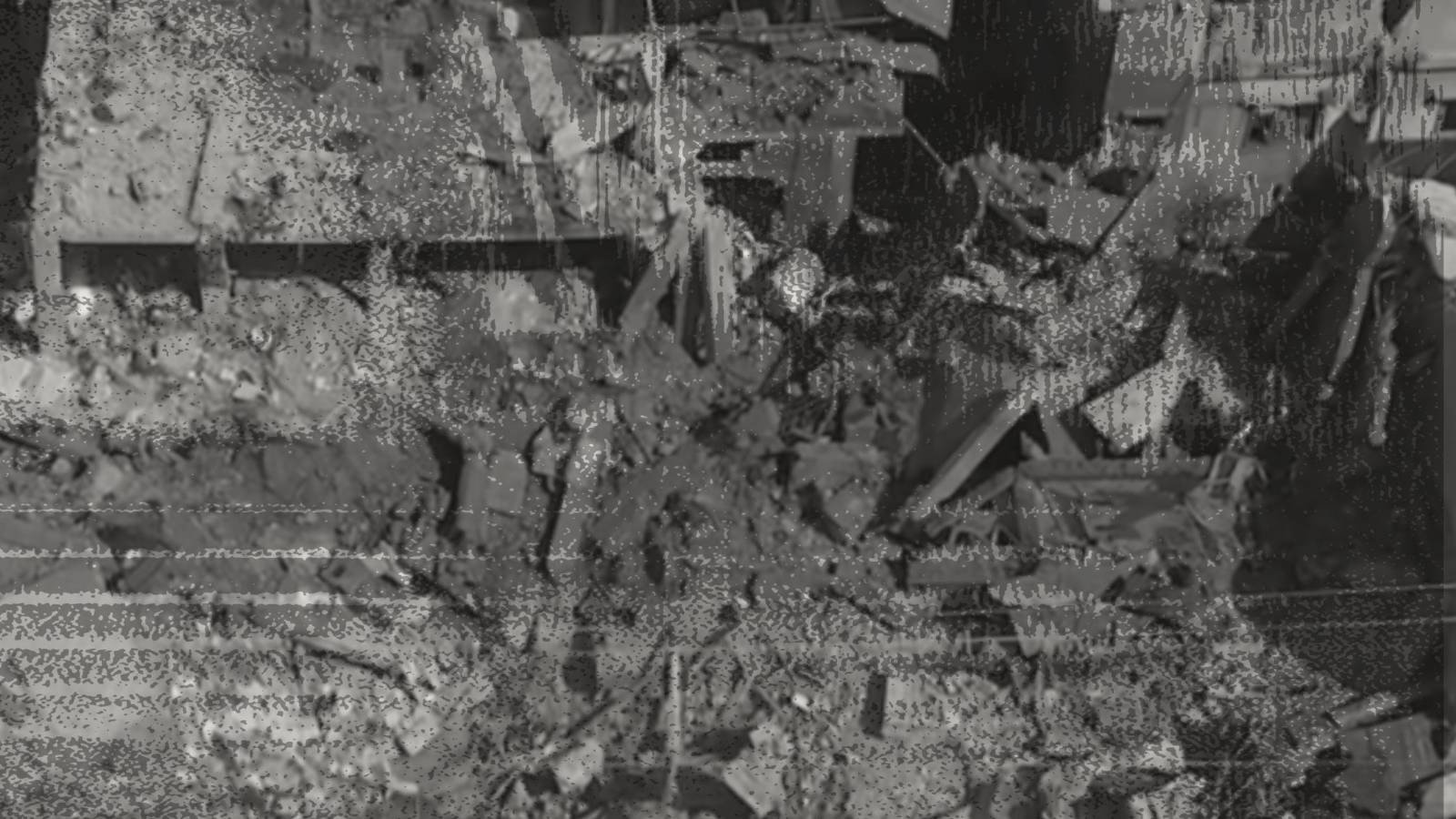
The economic conditions in the Gaza Strip are deteriorating, and food insecurity is on the rise, as a direct result of the escalation of hostilities since October 2023. People in the Strip are suffering through a stifling food crisis and a food funding deficit, alongside the obliteration of infrastructure and food sources, and the restriction of humanitarian aid. UNICEF has warned that acute food insecurity puts all children under five in Gaza at high risk of severe malnutrition and preventable death.
Bakeries responsible for part of the Strip's food needs endured their share of destruction, whether through direct bombing or damage that forced them to shut down. The World Food Programme (WFP) stated that airstrikes caused many of the bakeries it works with to distribute bread to the displaced to shut down, adding that approximately 2.2 million people need food aid. Al-Maghazi al-Jadeed Bakery was one of those damaged by direct bombardment — a strike that raises fundamental questions about the warring parties' commitment to international humanitarian law, particularly in light of Israel's orders for Gazans to move south.
1. About the Bakery and Its Vital Role
Situated in the Gaza Strip, al-Maghazi al-Jadeed Bakery is, according to civilian testimony, the only bakery in the area — a crucial bread distribution point for thousands of families residing in al-Maghazi camp and for those displaced by the bombardment since October 2023.
The Palestinian Government Media Office stated that Israeli shelling completely destroyed the bakery on the evening of October 24, 2023, adding that it had received flour and fuel from UNRWA just hours earlier. This was confirmed by bakery worker Ahmed Ziyara, who said UNRWA had provided flour and gas so the bakery "would start today by selling a bundle of bread for four shekels," but the bombing prevented this. UNRWA's thirteenth situation report, published the day before the attack, noted that flour was still being supplied to 30 bakeries across the Strip — raising the possibility that al-Maghazi was one of those 30 supported bakeries.
2. Sequence of Events: Verifying the Timing of the Attack
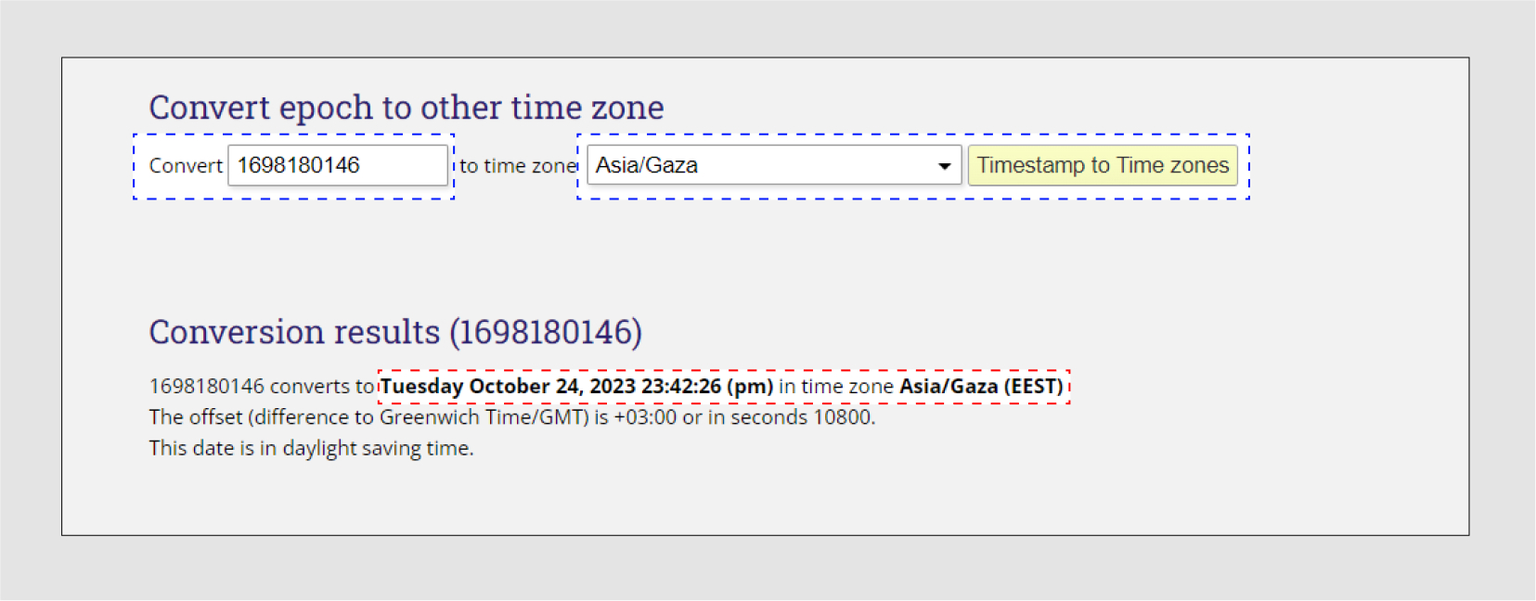
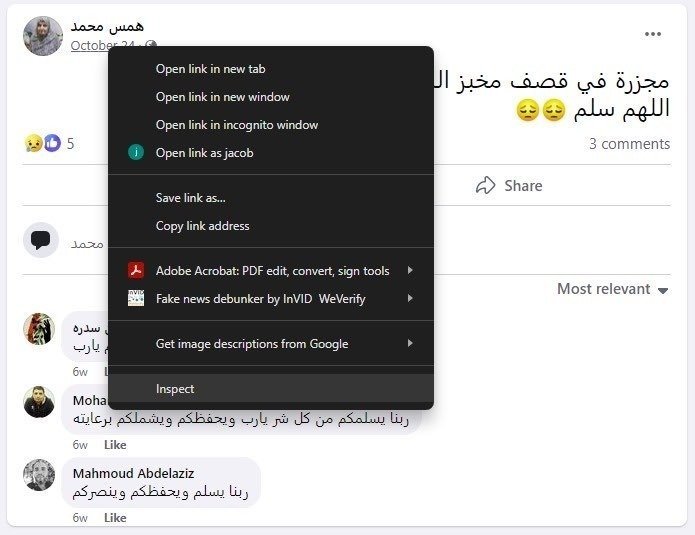
Reports of the bombing began surfacing late in the evening of October 24. At precisely 23:42 Gaza time, civilian Hams Mohammad posted on Facebook describing the incident as "a massacre in the bombing of al-Maghazi bakery." To verify the exact time, the timestamp ID of her post was extracted using the Inspect feature and searching the attached Facebook metadata for the phrase story":{"creation_time, revealing the timestamp ID (1698180146). Using the EpochConverter tool to convert it to Gaza City time confirmed the post was published Thursday, October 24, at 23:42:26 Gaza time.
First report on Facebook
Hams Mohammad describes the incident as "a massacre in the bombing of al-Maghazi bakery."
Cascading Telegram reports
The al-Aqsa channel reports 4 dead; journalist Mahmoud al-Louh confirms martyrs and injuries, then updates a minute later to confirm 6 deaths.
Additional location details
Khalil al-Ghafari, an al-Maghazi resident, reports the al-Barbarawi family's house was targeted in Souk al-Maghazi, destroying the adjacent bakery.
Documenting the full extent of destruction
The al-Maghazi Now Facebook page publishes photos documenting tremendous destruction to the bakery, Hammadah Ice Cream Parlor, Aabed Money Exchange, and nearby shops and residential buildings.
This timeline is corroborated by two field testimonies: bakery worker Ahmed Ziyara told al-Ray News Agency the attack occurred while workers were on a break between 22:00 and midnight, and the bakery's owner told Al Araby that they left at 21:00 and returned at 23:00 to prepare for the next day, only to find — ten minutes before their return, while about 50 meters away — that the bakery had already been bombed.

Posts from the al-Maghazi Now Facebook page documenting the immediate aftermath of the attack on al-Maghazi al-Jadeed Bakery and the surrounding buildings.
3. Verifying the Impacted Location & Analyzing the Destruction
To validate these accounts, a search on YouTube surfaced a video posted by the Alkofiya TV channel in April 2022 — nearly a year before the attack — showing a tour through the streets of al-Maghazi camp, including footage of the bakery's façade before it was targeted. This façade matched a photo posted by Ramy Abdu on X, which he claimed showed the bakery before the attack.
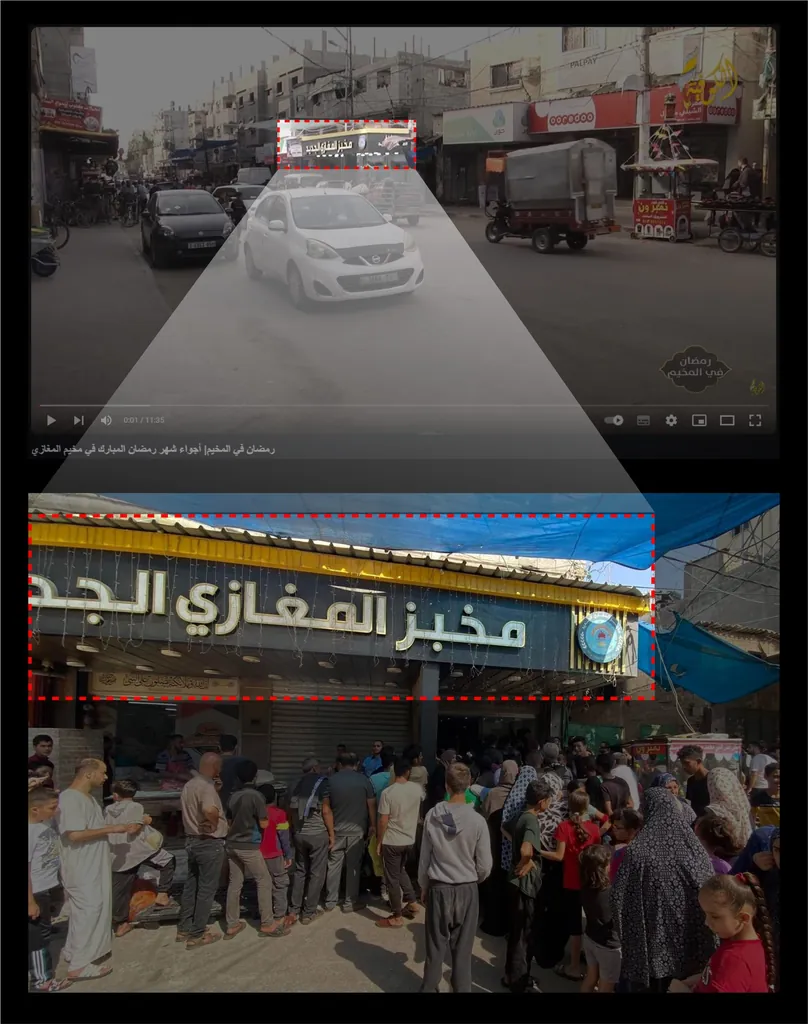
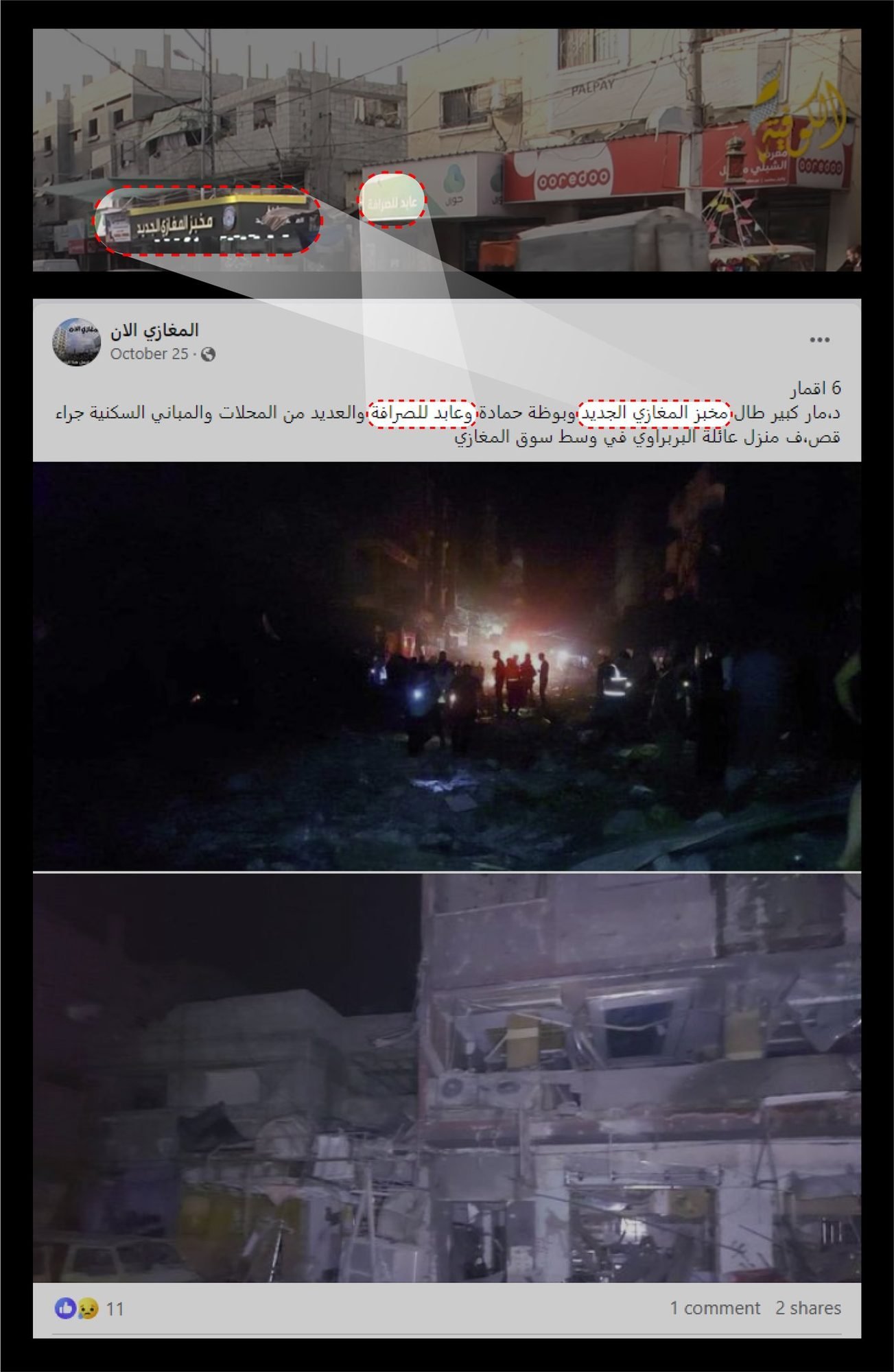
Above: A screenshot from a video posted by the Alkofiya TV channel on YouTube, and a photograph posted by Ramy Abdu on X, both showing al-Maghazi al-Jadeed Bakery before it was targeted. Below: Alkofiya TV's footage matched against al-Maghazi Now's Facebook post reporting the attack. January 2024.
By searching satellite imagery on Google Maps and comparing it against footage of the bakery before the attack (Alkofiya TV) and aerial images of the site after the attack (Al Jazeera), matching prominent landmarks across the different sources, the location was verified precisely: al-Maghazi camp, in the central market of Deir al-Balah Governorate, central Gaza Strip, at coordinates (31.42197, 34.38353).
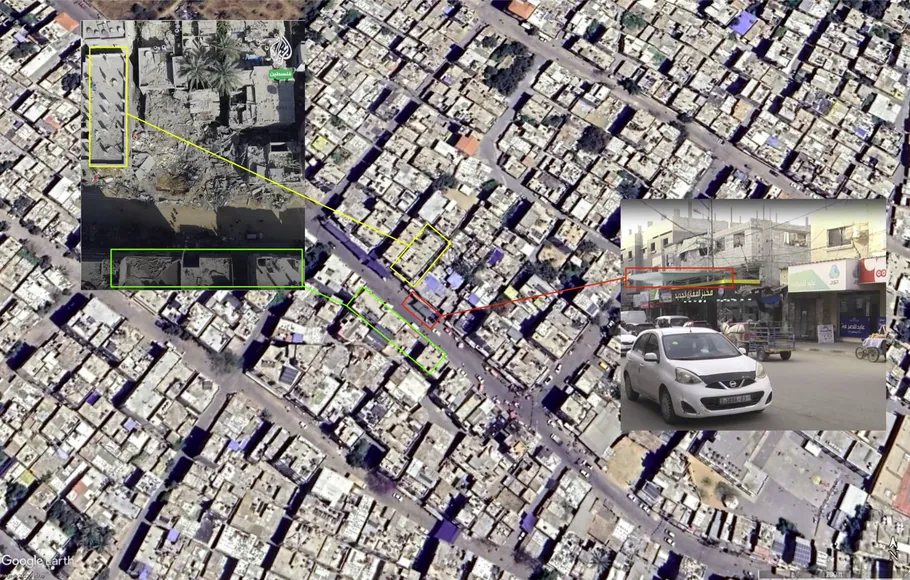
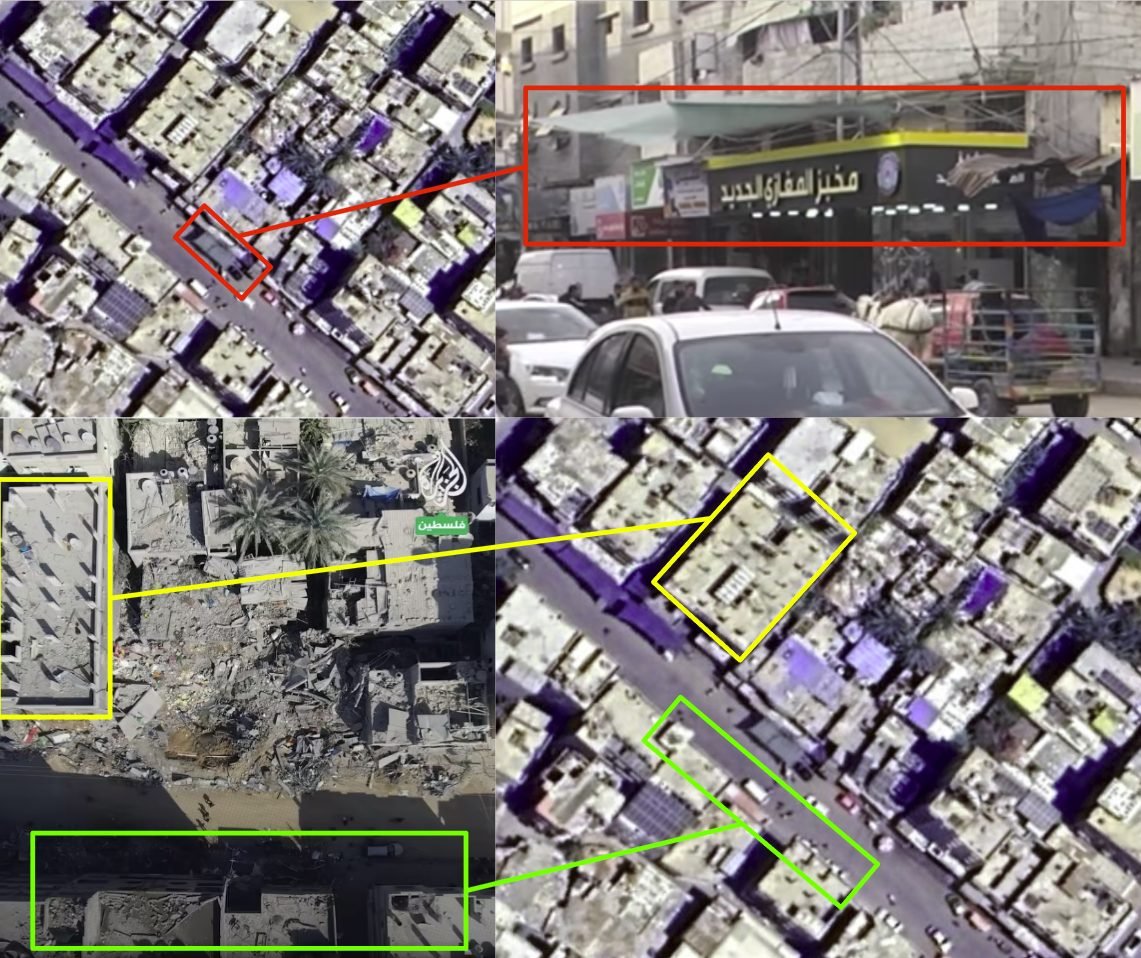
Screenshots of the affected site: satellite imagery from Google Maps set against Al Jazeera's aerial footage of the site after the attack, matching prominent landmarks. January 2024.
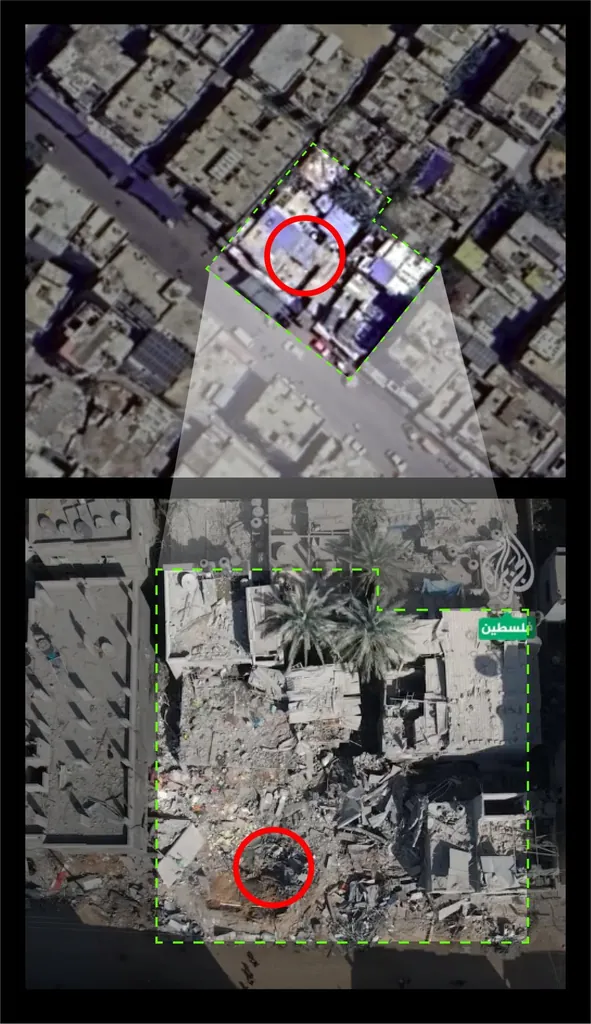
A comparative analysis of satellite images from June 2022 and November 2023 reveals significant changes: the earlier image shows the bakery intact as part of the vital infrastructure of a densely populated area, while the later image shows clear destruction where the bakery once stood, along with the resulting crater.


A photo album of the affected site after the attack, taken by Attiya Darwish. Source: al-Ray News Agency.
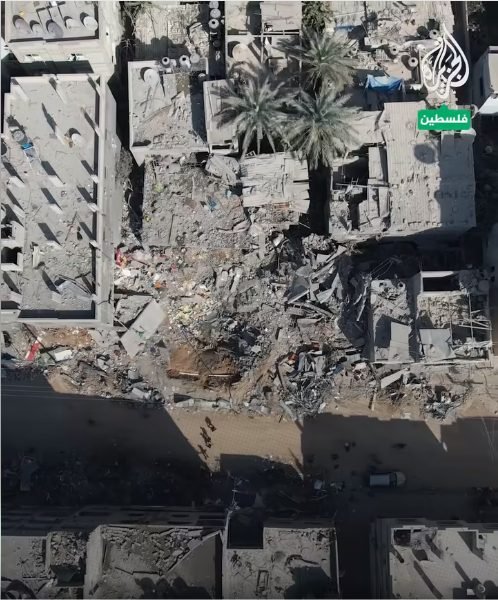
Aerial footage published by Al Jazeera reveals a large crater resulting from the attack, indicating the immense power of the explosion and its highly destructive impact on the surrounding infrastructure.
4. Measuring the Crater & Estimating the Weapon's Yield
To better understand the incident, the crater resulting from the attack was analyzed using the ImageJ tool, using the average height of a bystander (about 175 cm) visible next to the crater in a YouTube video published by Wafa Agency as a reference for measurement.
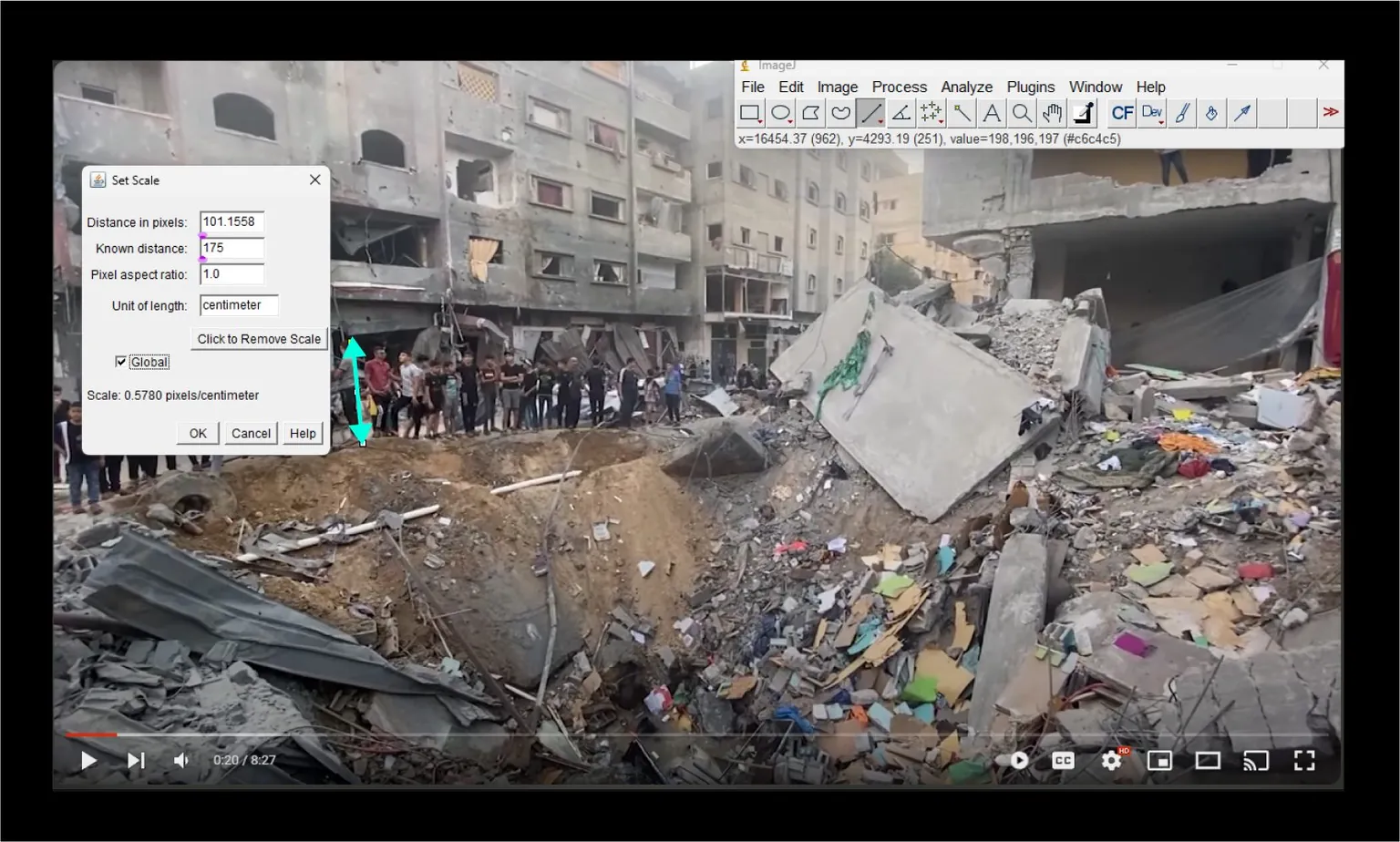


Screenshots from the Wafa Agency video showing the crater's diameter calculated at approximately 13.65 meters, and its depth at approximately 4.86 meters, based on the human-height reference measured with the ImageJ tool.
The crater resulting from the attack is estimated at approximately 13.65 meters in diameter and 4.86 meters deep — a finding cross-checked with the measurement tool in Google Earth Pro, which produced a comparable result of approximately 13.53 meters.
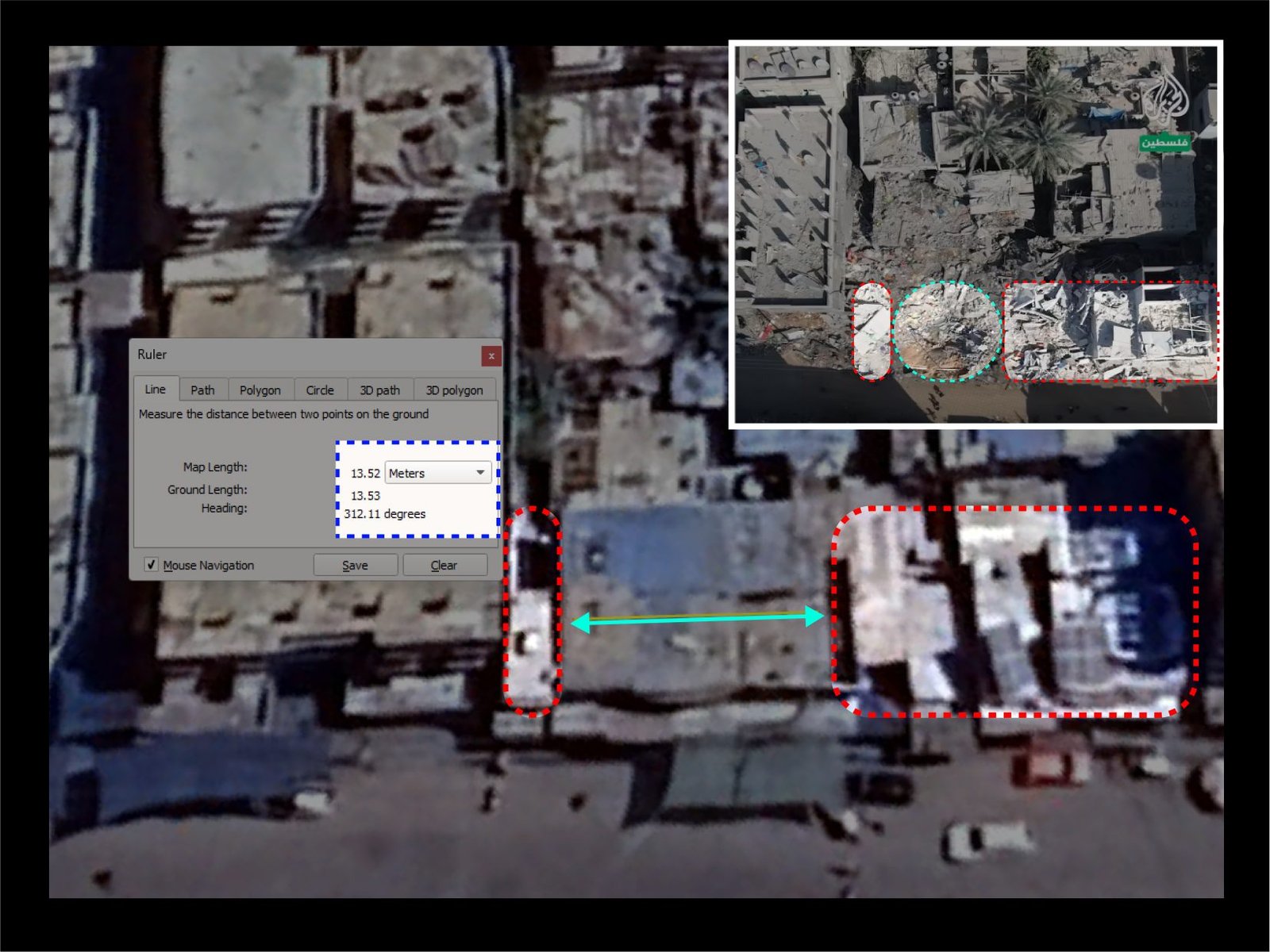
This estimate is approximate, and a more precise analysis would require specialized investigative bodies with access to the site. According to the Armament Research Services (ARES) report on Explosive Weapons in Populated Areas, the damage caused by the munition that formed the crater is consistent with the characteristics of a large explosive weapon, likely in the 250-500 pound range, probably an air-delivered munition.

5. The Victims
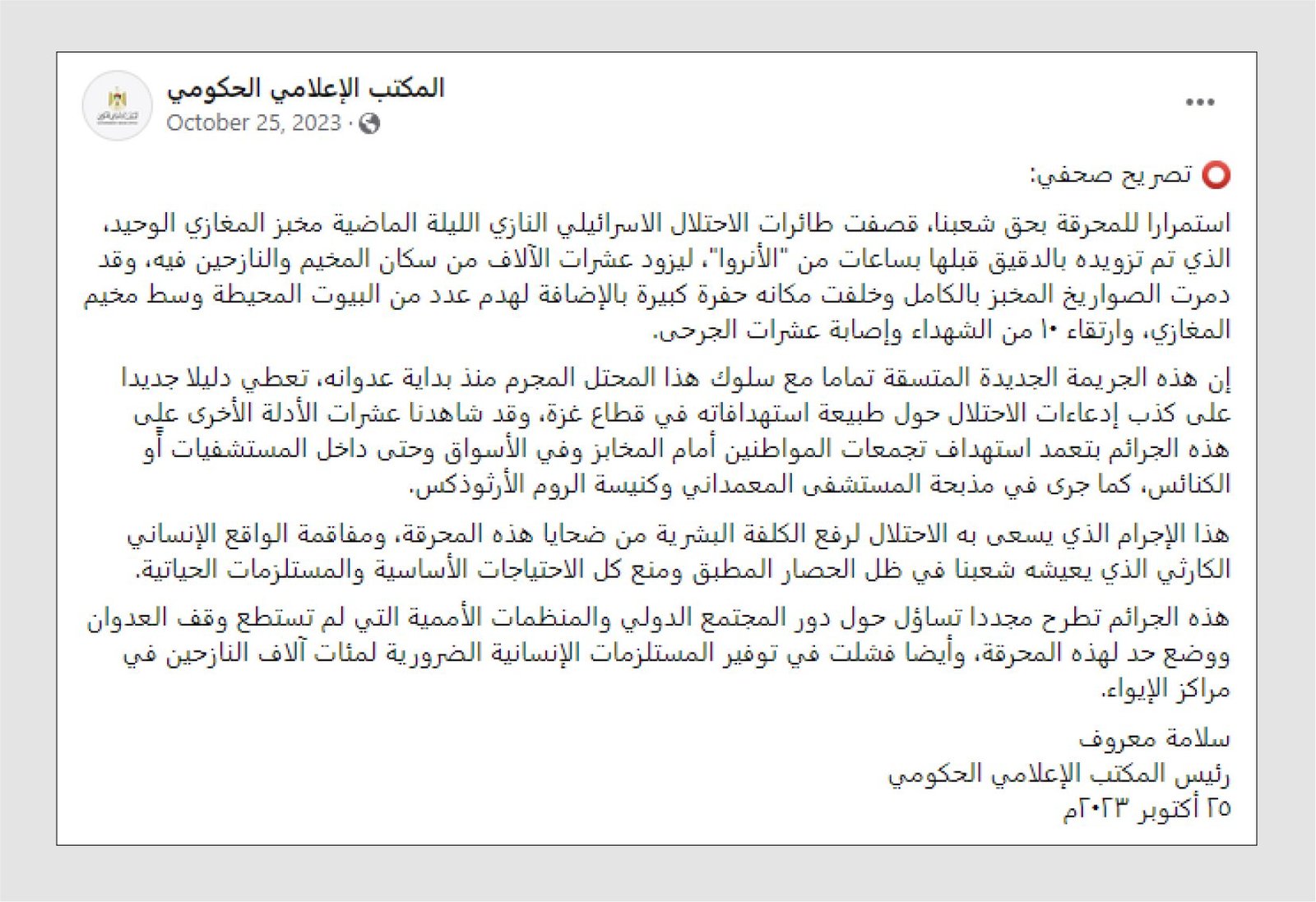
Initial reports indicated deaths and injuries, with the toll rising in the hours after the attack. On October 24, minutes after the strike, journalist Muthanna al-Najjar reported via Telegram that five people were killed; 35 minutes later he updated the toll to seven, sharing images of emergency first-aid operations en route to al-Aqsa Martyrs Hospital. The next day, the death toll rose to 10, as reported by Anadolu Agency and confirmed by activists on social media. Salama Maarouf, head of the Palestinian Government Media Office in Gaza, confirmed in a statement that the attack on al-Maghazi al-Jadeed Bakery killed 10 people and injured tens more.
6. The Impact of International Law & the Need for Independent Investigations
The repeated attacks on bakeries in Gaza — particularly al-Maghazi al-Jadeed Bakery, targeted just after receiving fuel and flour from UNRWA — raise fundamental questions about compliance with international law. Targeting civilian facilities like bakeries is a clear violation of international humanitarian law when it produces such severe humanitarian consequences. Article 33 of the Fourth Geneva Convention prohibits collective punishment and all forms of terrorism and intimidation, while Article 53 of the same Convention prohibits the destruction of public or private property except in cases of absolute military necessity.
While documenting this attack, the investigation came across visual materials alleging at least six other, unverified attacks on bakeries between October 10 and November 1, 2023, including al-Yazigi Bakery in Tal al-Hawa and al-Wahat Bakery, Kamal Ajur Bakery's al-Sedra and Sheikh Radwan branches, al-Maghazi al-Jadeed Bakery, and two branches of al-Sharq Bakery in Jabalia and al-Nasr Street. Under Additional Protocol I to the Geneva Conventions, Article 48 prohibits targeting civilian populations or objects, Article 51(2) prohibits acts of violence intended to spread terror among civilians, and Article 54(2) prohibits attacks on objects indispensable to civilian survival, such as foodstuffs and water installations.
In this context, these attacks on Gaza's bakeries may constitute a clear violation of these provisions, given that bakeries are vital facilities for food security and civilian survival. There is an urgent need for independent, transparent investigations to determine whether these actions constitute violations of international law, and to hold those responsible accountable — safeguarding civilians in the future.